Health Happens Here: Libraries Respond to Local Needs
Key Takeaways
- Accessibility shaped by residents, not assumptions — Libraries build improvements around community input and local priorities rather than one size fits all solutions
- Better outcomes through data first design — Libraries pair demographic, health, and access data before launching programs, so resources reach the neighborhoods that need them most
- Cooling infrastructure during extreme heat and weather events — Libraries function as accessible, air conditioned public spaces, linked to lower heat related mortality
- A bridge over rural broadband gaps — Libraries bring telehealth, government services, and health information within reach for residents without home internet access
- Backed by strong institutional support — ALA and generous funders like AARP, IMLS, and state library agencies help libraries turn these ideas into lasting programs
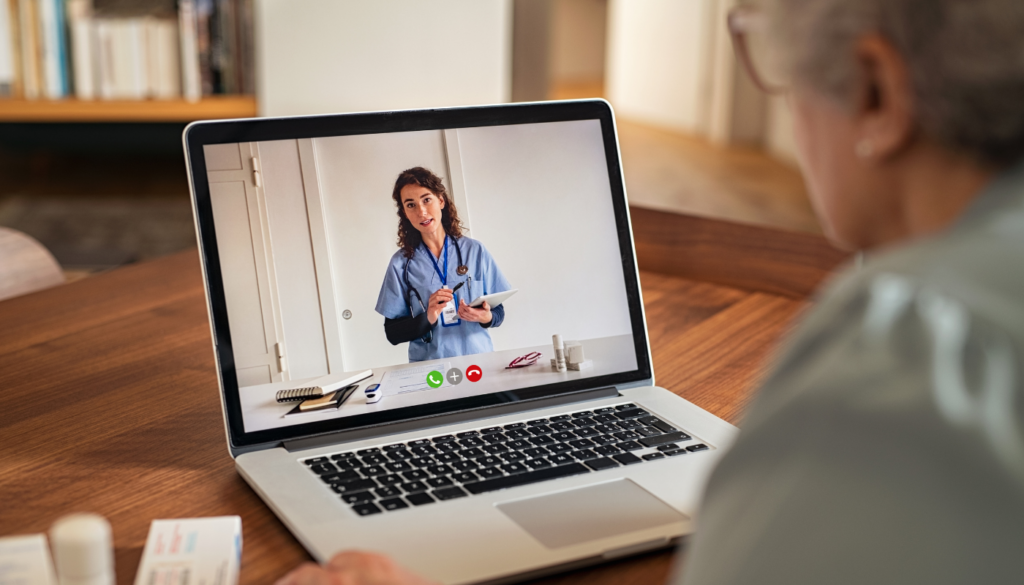
In Johnston County, Oklahoma, the public library has a private room built for one purpose: giving residents a place to attend telehealth appointments without driving an hour or more to the nearest clinic. At a sister branch in Sulphur, that room recently allowed a woman who is deaf to meet with her doctor while a trusted friend translated the conversation into American Sign Language. A simple private space removed a barrier to care that had little to do with medicine and everything to do with access.
The telehealth room was funded through an AARP Community Challenge grant in 2023. But the grant isn’t really the story. The story is that the library recognized a barrier to healthcare in its community and found a practical way to remove it.
That approach is becoming increasingly common. Across the country, libraries are responding to local health challenges in ways that reflect the communities they serve. Some become cooling centers during dangerous heat waves. Others host food pantries, partner with hospitals, provide space for mental health support groups, employ social workers, or create programs that help older adults stay active, independent, and connected.
Programs look different because communities do.
The most successful initiatives all begin with the same question:
What does our community need most?
Today, libraries have better tools than ever to answer that question. Demographics, chronic disease, food access, transportation, broadband availability, environmental conditions, healthcare resources, and other indicators can all be examined together to understand local conditions before a program is designed, a partner is approached, or a grant application is written.
Before You Build a Program, Understand the Community
Whether you’re applying for funding, looking for community partners, or deciding which branch should host a new service, the first step is understanding the people you serve.
Some of the questions data can help answer include:
- Where are older adults living alone?
- Which neighborhoods have limited access to grocery stores?
- Where are rates of diabetes, asthma, or other chronic conditions highest?
- Which areas have the fewest healthcare providers?
- Where do residents face transportation barriers?
- Which neighborhoods have limited broadband access that makes telehealth difficult?
- Where are poverty, housing instability, or environmental burdens concentrated?
Looking at these indicators together often reveals opportunities that aren’t obvious from day-to-day interactions alone. It also helps libraries explain why a program belongs in a particular neighborhood, strengthen grant applications, build partnerships, and ensure limited resources go where they can make the greatest difference.
Protecting Residents During Extreme Heat
Heat is one of the country’s deadliest weather hazards, and older adults, low-income households, and neighborhoods with little tree canopy often experience the greatest risk.
Libraries have become an important part of many communities’ heat response because they’re already trusted, air-conditioned public spaces.
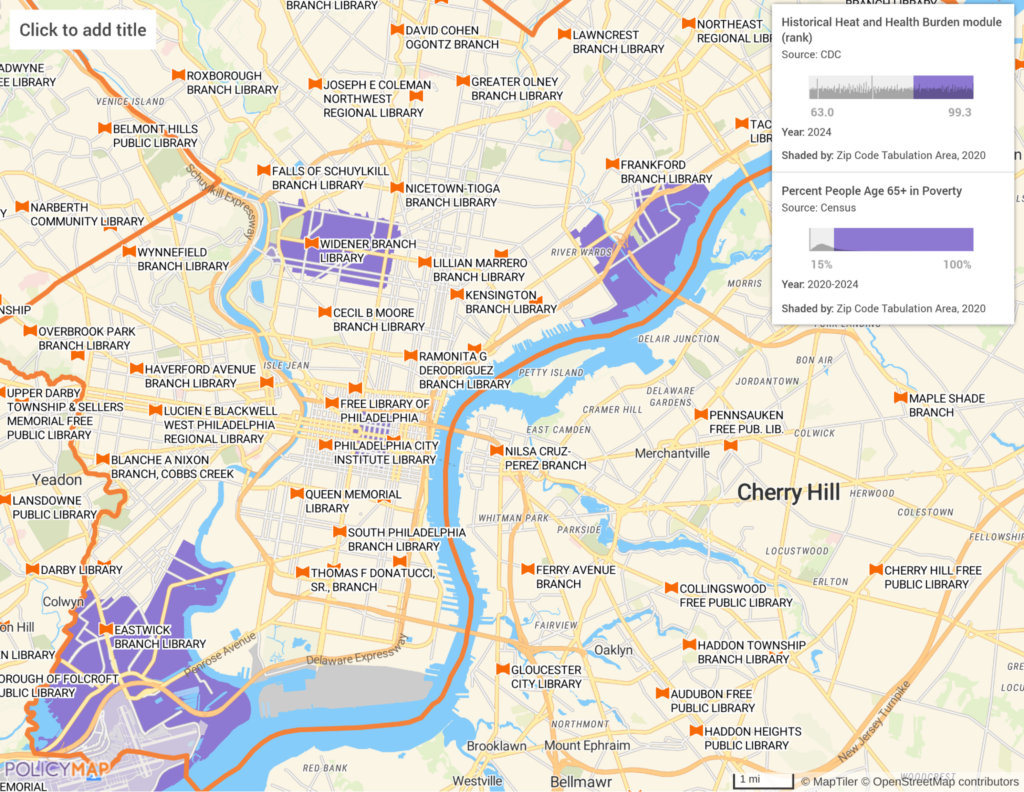
Historical Heat and Health Burden (2024), Philadelphia area libraries. Purple ZCTAs mark the highest heat burden areas (63rd to 99.3rd percentile), including parts of North Philadelphia, the River Wards, and Eastwick/Darby. Library branches are shown as potential cooling center resources for residents in these high-risk zones.
Philadelphia is one example. During periods of extreme heat, the city’s public health department designates dozens of cooling centers across the city, many of them Free Library branches. Residents can escape dangerous temperatures, access drinking water, and spend time in a safe public space close to home.
Research titled “Libraries as Resilience Infrastructure: Reducing Heat Related Mortality Across U.S. Counties” by Ali Khaleghinia and Rachel Krauss examined more than 3,000 U.S. counties and found that public libraries function as everyday cooling infrastructure, with their presence associated with lower heat-related mortality, not because of a special program, but because they’re open, accessible, and free.
For libraries considering similar efforts, mapping older adult populations, poverty, housing conditions, park access, and heat burden can help identify where cooling resources would have the greatest impact.
Expanding Access to Healthy Food
Food insecurity isn’t evenly distributed across a community, and neither are opportunities to address it.
At Chicago Public Library’s Legler Regional Library, staff operate a food pantry that provides fresh produce, proteins, dairy products, and other groceries. Staff also help visitors learn how to prepare unfamiliar foods, recognizing that nutrition education can be just as valuable as the food itself.
The Camden County Library System in New Jersey took a different approach. After recognizing that many Camden residents had limited access to full-service grocery stores, the library partnered with Vetri Community Partnership to create Books and Cooks, a mobile culinary literacy program built around a traveling teaching kitchen.
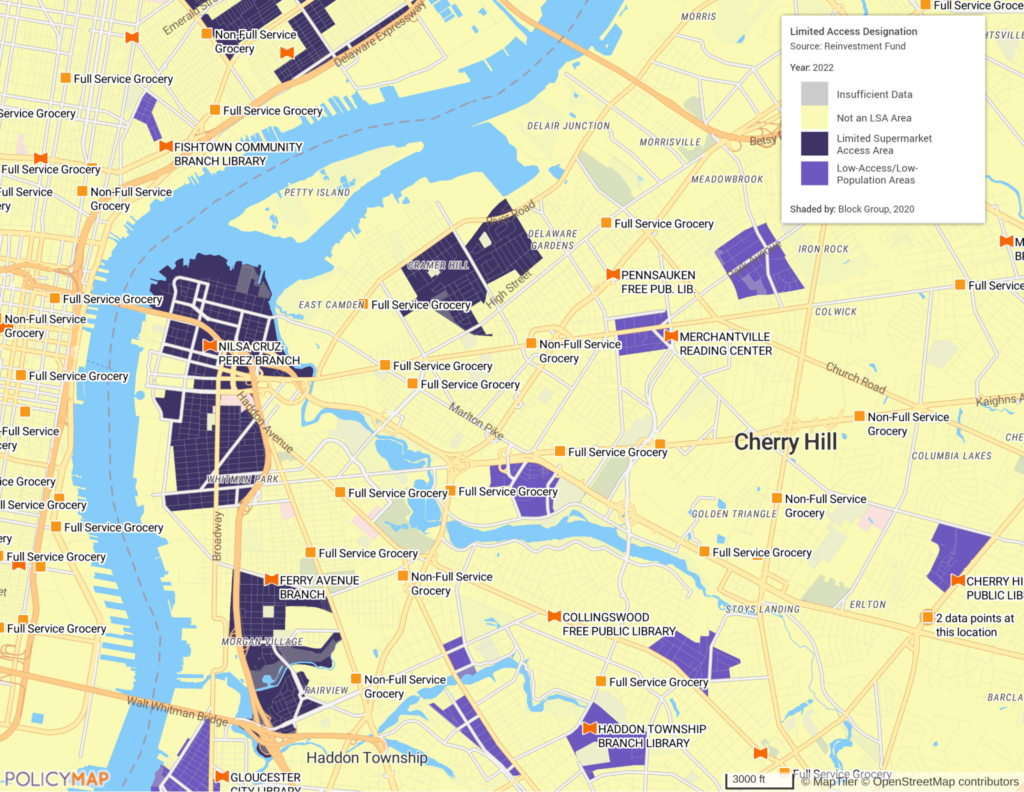
Limited Supermarket Access near Camden, NJ area libraries (2022). Purple block groups mark Limited Supermarket Access and Low-Access/Low-Population areas across Whitman Park, Morgan Village, and Fairview. The map shows library branches alongside grocery locations as potential community food-access anchors.
Although the programs differ, both began by responding to local conditions rather than adopting someone else’s model.
Mapping grocery access alongside chronic disease, poverty, transportation, and population density can help libraries determine where nutrition-related programming may have the greatest impact.
Creating Space for Mental Health Support
Libraries have become trusted places where community members can connect with support in familiar, welcoming surroundings.
In Cape May Court House, New Jersey, the local library hosts a monthly NAMI Family Support Group for adults who have loved ones experiencing symptoms of a mental health condition. The library doesn’t run the program—it provides an accessible, stigma-free space where people know they can find help.
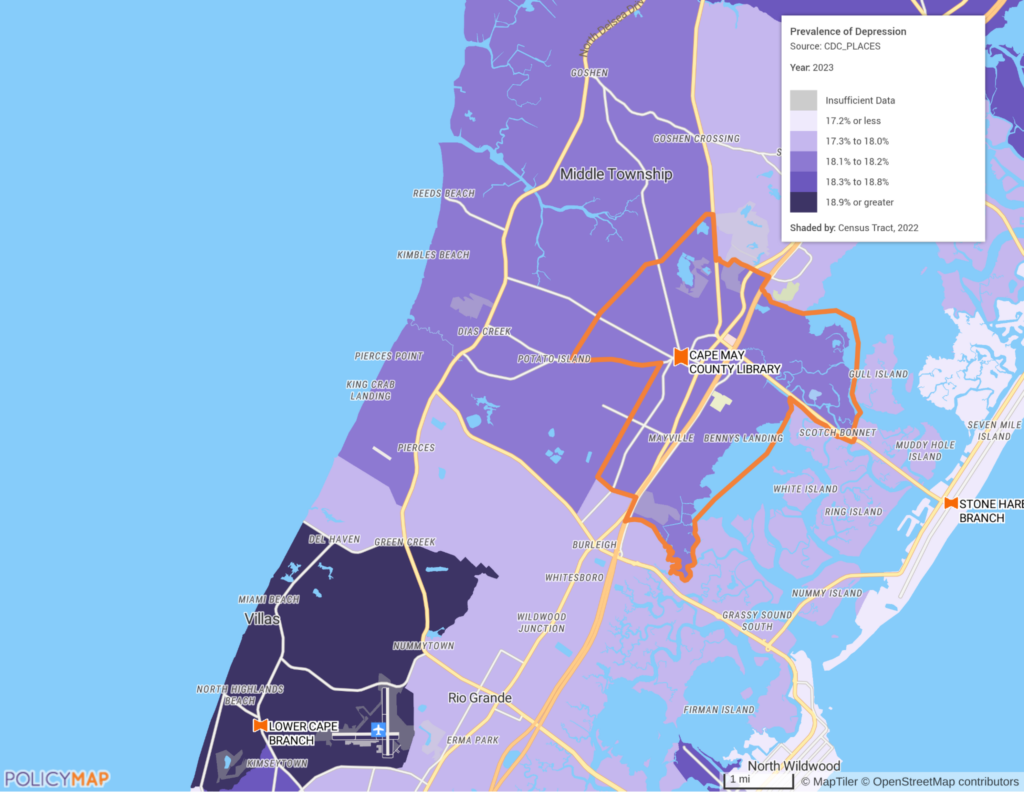
Prevalence of Depression, Cape May County, NJ (2023). Darker shaded census tracts show higher depression prevalence, with the Villas and North Highlands Beach reaching 18.9% or greater. Cape May County Library branches, including Cape May County Library, Lower Cape Branch, and Stone Harbor Branch, are shown as potential access points for mental health resources and support in these communities.
The Camden County Library System has gone a step further by employing a licensed social worker who assists patrons with SNAP enrollment, housing resources, healthcare navigation, employment assistance, utility assistance, and referrals for counseling and behavioral health services.
Libraries considering similar partnerships can use community data to better understand behavioral health needs, provider shortages, insurance coverage, and populations that may face barriers to accessing care.
Helping Older Adults Stay Connected
Many library health initiatives focus on helping older adults remain healthy, independent, and connected.
Scarborough Public Library in Maine used an AARP Community Challenge grant to create accessible walking paths that encourage physical activity and social connection in a community without a walkable downtown.
The Laurel-Jones County Library System in Mississippi addressed a different challenge by converting a donated trolley into a mobile technology center equipped with laptops, printers, and Wi-Fi. The service helps older adults and others access telehealth appointments, government services, and health information without traveling long distances.
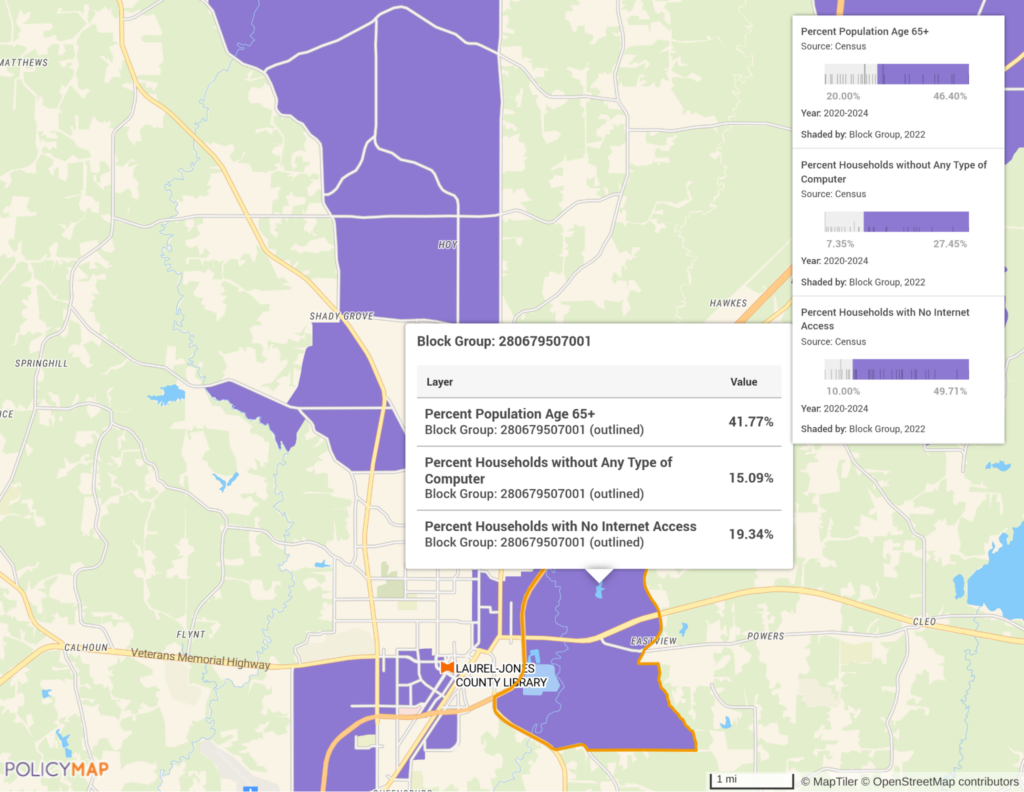
Older adult population and digital access in Laurel-Jones County Library’s service area. Purple shaded block groups across the surrounding rural areas, including Hoy, Shady Grove, and Eastview, show a range of 20% to 46.40% population age 65 and older, up to 27.45% of households without a computer, and up to 49.71% of households with no internet access. The outlined block group, adjacent to the library, has 41.77% of its population age 65 and older, 15.09% of households without a computer, and 19.34% of households with no internet access.
Understanding where older adults live, where transportation is limited, and where broadband access is lacking can help libraries identify similar opportunities.
Designing Libraries Everyone Can Use
Accessibility improvements work best when they’re shaped by the people who will use them.
That’s the philosophy behind the American Library Association’s Libraries Transforming Communities: Accessible Small and Rural Communities initiative. Before receiving funding, participating libraries engage community members to understand local priorities. Projects have included sensory-friendly spaces, hearing loops, automatic door openers, chair lifts, and other improvements designed around community input.
The initiative has also inspired partnerships that extend beyond the library building. In Montana, Lewistown Public Library partnered with Central Montana Medical Center to provide books, audiobooks, activities, and letters for patients receiving cancer treatment—another example of a library responding to a specific local health need through collaboration.
Building Capacity
Many libraries begin this work through partnerships rather than by hiring specialized staff.
Organizations like the National Network of Libraries of Medicine offer free training, planning tools, and examples that help librarians develop health programming and connect with healthcare organizations, public health agencies, and nonprofit partners.
Funding is often available as well. Many successful programs began as pilot projects supported by organizations such as AARP, state library agencies, IMLS, or the American Library Association before becoming permanent services.
Health Starts With Understanding the Community
The libraries doing the most impactful health work didn’t start with a program idea.
They started with a community question.
Where are people struggling to access healthcare? Which neighborhoods experience the greatest food insecurity? Where are older adults most isolated? Which residents face transportation or broadband barriers? Where is extreme heat creating the greatest health risk?
The answers rarely come from assumptions. They come from understanding local conditions.
By combining demographic, health, economic, environmental, and access data, libraries can better identify community needs, build stronger partnerships, support evidence-based grant applications, and direct limited resources where they can make the greatest difference. Platforms like PolicyMap make it possible to explore those patterns at the neighborhood level, helping libraries move from good intentions to informed action.
Health happens everywhere—in neighborhoods, schools, parks, homes, and libraries. The libraries making the biggest difference aren’t trying to become healthcare providers. They’re doing what libraries do best: listening to their communities, bringing people together, and responding to local needs. The more clearly they understand those needs, the greater their impact can be.
Request More Information
Have a question about your community? Learn how PolicyMap can help you uncover the answer. Fill in the form below to request more information about our mapping and analytics application and request your free trial.