Opportunity Zones 2.0 Are Coming – Here’s How PolicyMap Can Help

Key Takeaways
- OZ 2.0 is a decade-long opportunity: The program runs 2027–2036, with state nominations underway now and final designations expected by end of 2026
- 25% is the ceiling: Each state can nominate no more than 25% of its eligible low-income census tracts — making prioritization decisions critical
- 10 years unlocks the biggest benefit: Investors who hold Qualified Opportunity Fund investments for at least 10 years can exclude 100% of capital gains taxes on new growth
- All eligible tracts are already in PolicyMap: Stakeholders can begin analyzing and prioritizing LIC tracts today, before final designations are made
Opportunity Zones (OZ) 2.0 are coming in January 2027, and the monthslong process for each state to designate tracts for this important tax incentive program has begun. Once the final tracts are designated at the end of this year, OZ 2.0 will run from 2027 through 2036. This tax incentive program is of key interest to housing and health organizations, community and economic development agencies, private capital investors, urban and rural-focused organizations, and more.
PolicyMap has loaded all Eligible Low-Income Community (LIC) census tracts — the pool from which each state will nominate up to 25% of tracts as Qualified Opportunity Zones 2.0.
But data on which tracts are eligible is only the beginning of the story. Understanding which tracts are most in need — and most likely to see genuine community benefit — requires context. A tract’s OZ designation status tells you where investment can go; PolicyMap’s broader data tells you where it should go.
What are Opportunity Zones?
Opportunity Zones are federally designated census tracts — identified as low-income communities — where investors can receive capital gains tax benefits in exchange for deploying long-term capital. Each state nominates up to 25% of its eligible low-income census tracts, which are then certified by the U.S. Department of the Treasury.
The core tax benefits for investors who place eligible gains into a Qualified Opportunity Fund include: deferral of tax on reinvested capital gains; a step-up in basis for investments held at least five years; and exclusion of capital gains taxes on new investment growth for funds held at least 10 years.
For communities, the intended outcome is new investment in real estate development, business creation, and job growth in areas that have historically struggled to attract private capital.
How can PolicyMap help?
PolicyMap can help you prioritize tracts for nomination based on accurate, relevant and timely data about conditions in neighborhoods across the country that can help you target census tracts for final OZ designation and then strategically moving forward with implementation.
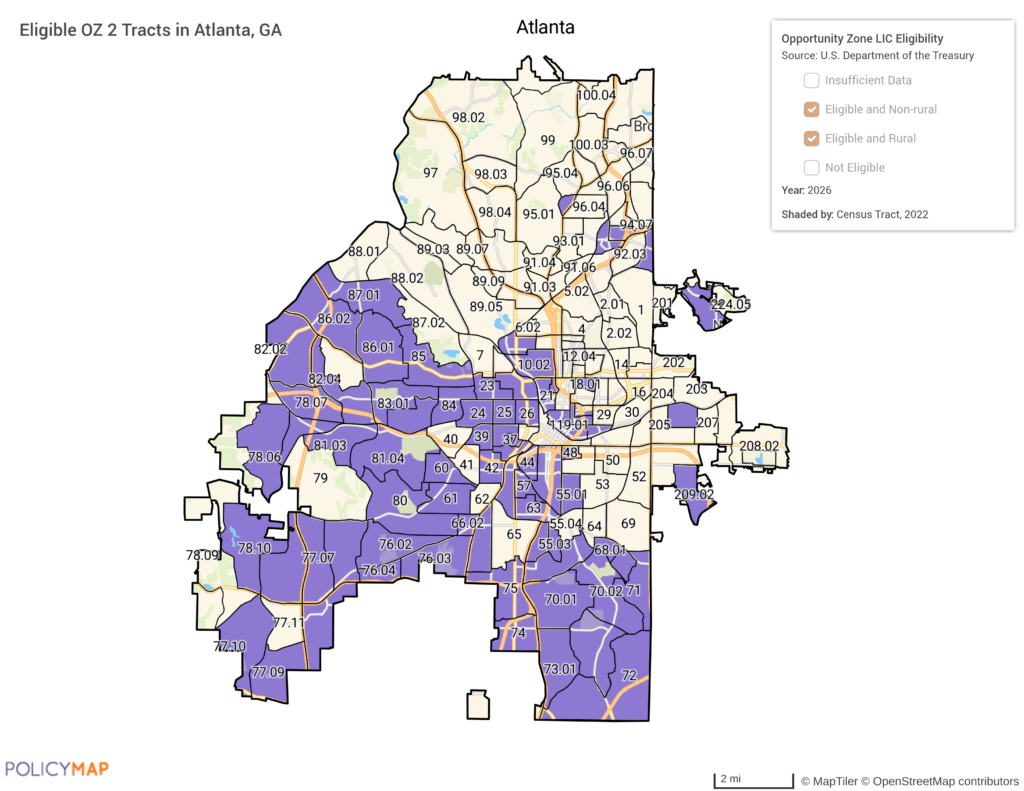
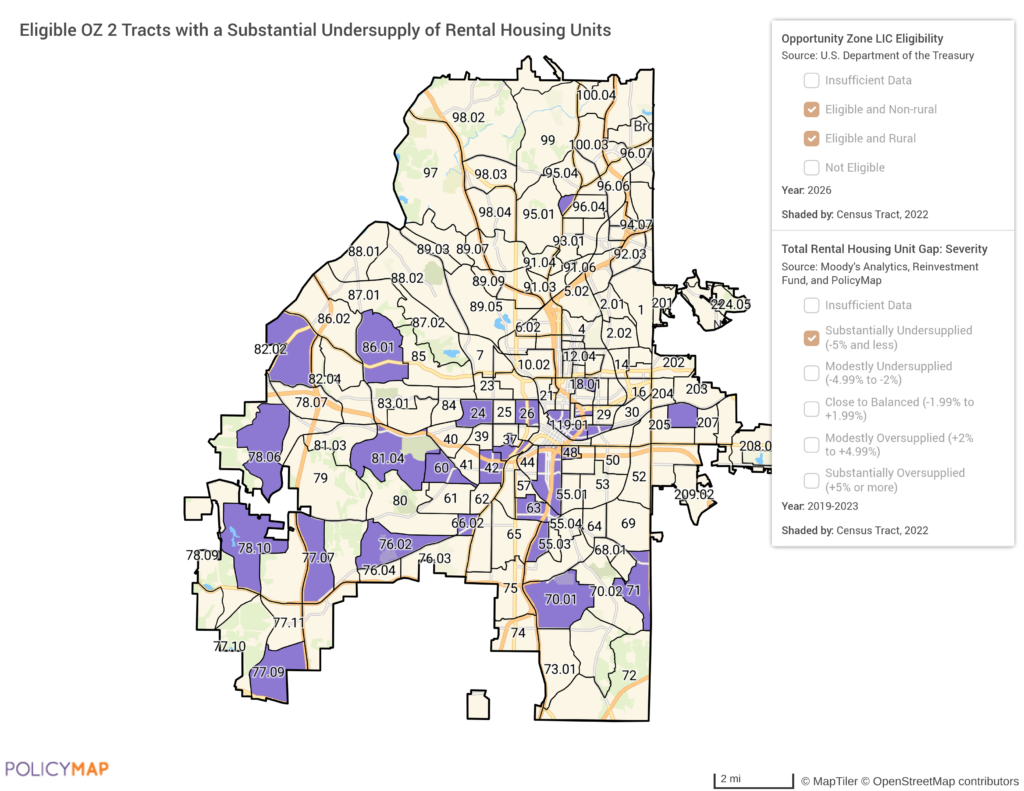
- Housing: Combine OZ 2.0 LIC eligibility with data on where rental housing is most critically needed to prioritize real estate development for renter units. The first map shows all eligible tracts in Atlanta; the second shows just those eligible tracts with a severe shortage of rental units. Learn more about our housing gap data.
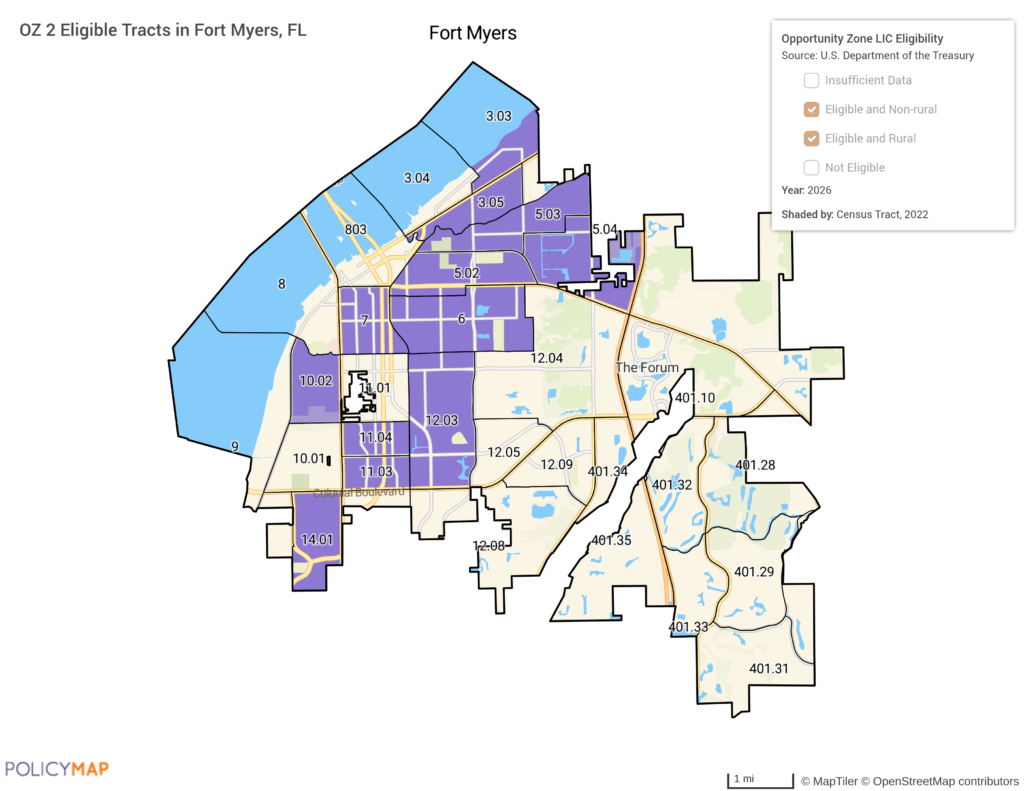
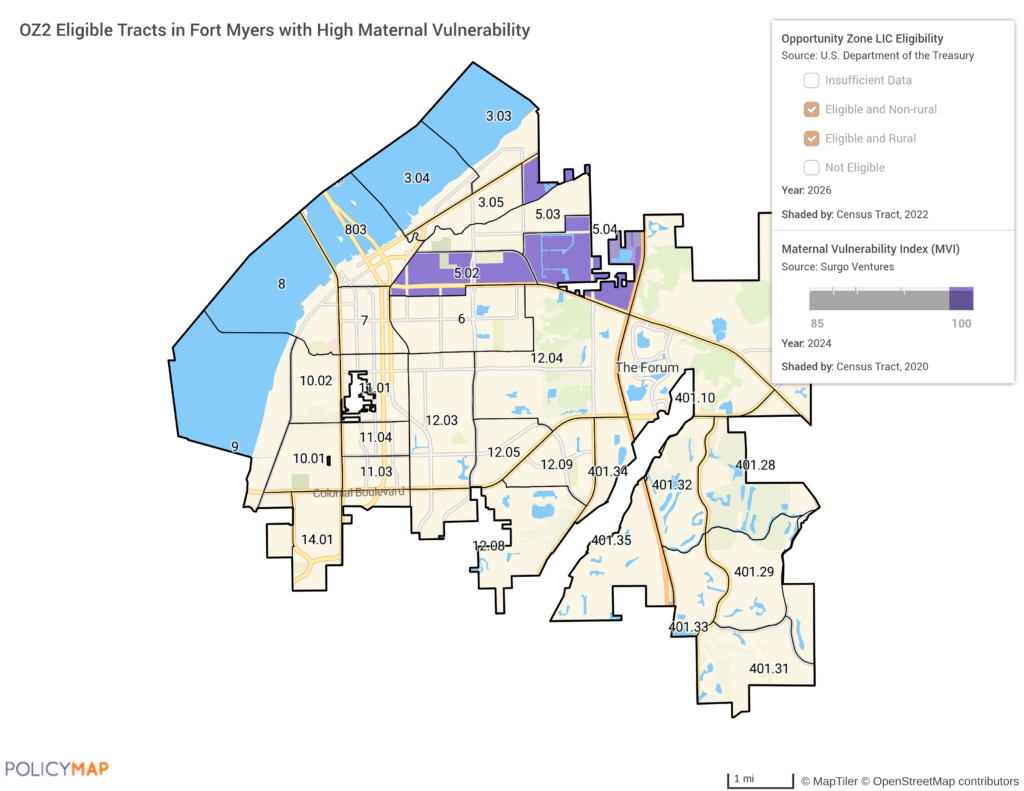
- Health: Combine OZ 2.0 LIC eligibility with crucial health factors like maternal vulnerability to pinpoint tracts where health facility investments might have the greatest impact on health outcomes. The first map shows all eligible tracts in Fort Myers; the second shows just those eligible tracts with very high maternal vulnerability.
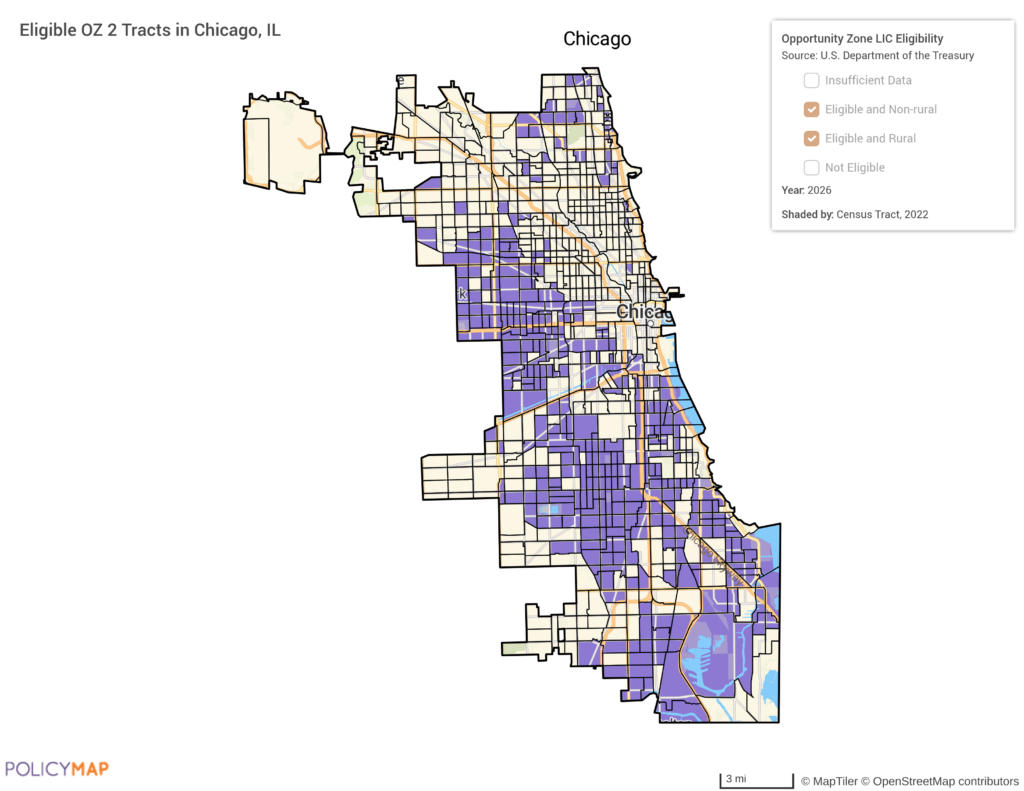
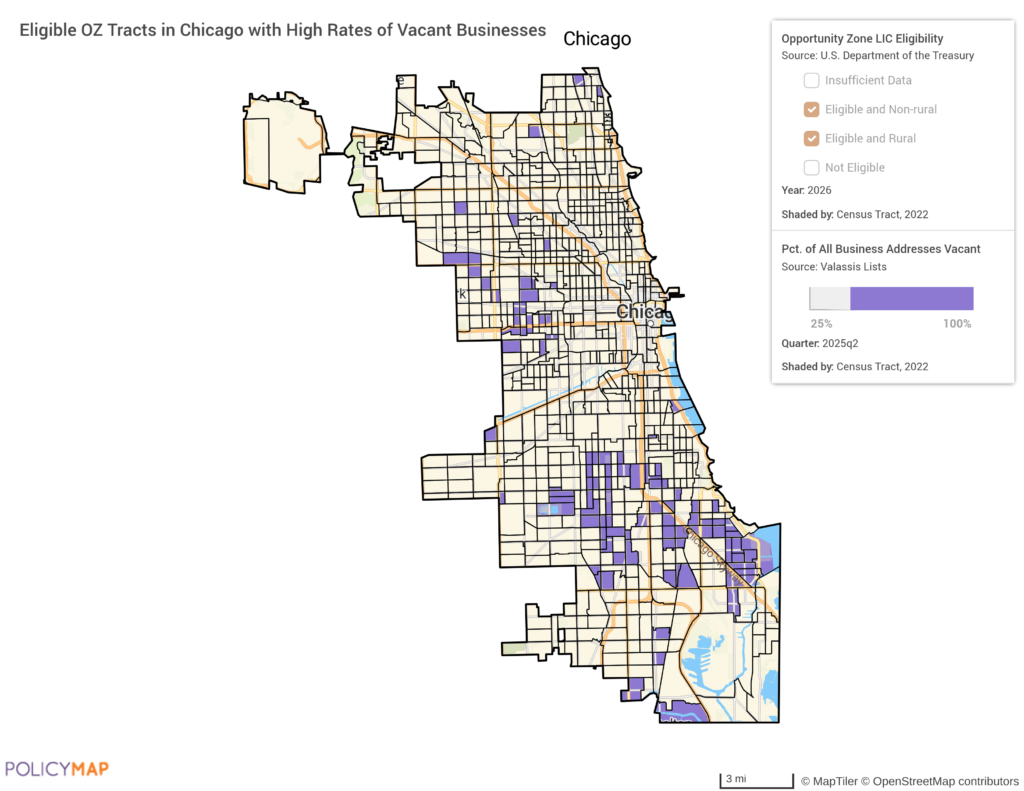
- Jobs: Combine OZ 2.0 LIC eligibility with data on business vacancy rates to identify communities where investments in local businesses may be most needed. The first map shows all eligible tracts in Chicago; the second map shows just those eligible tracts where at least 25% of business addresses are vacant.
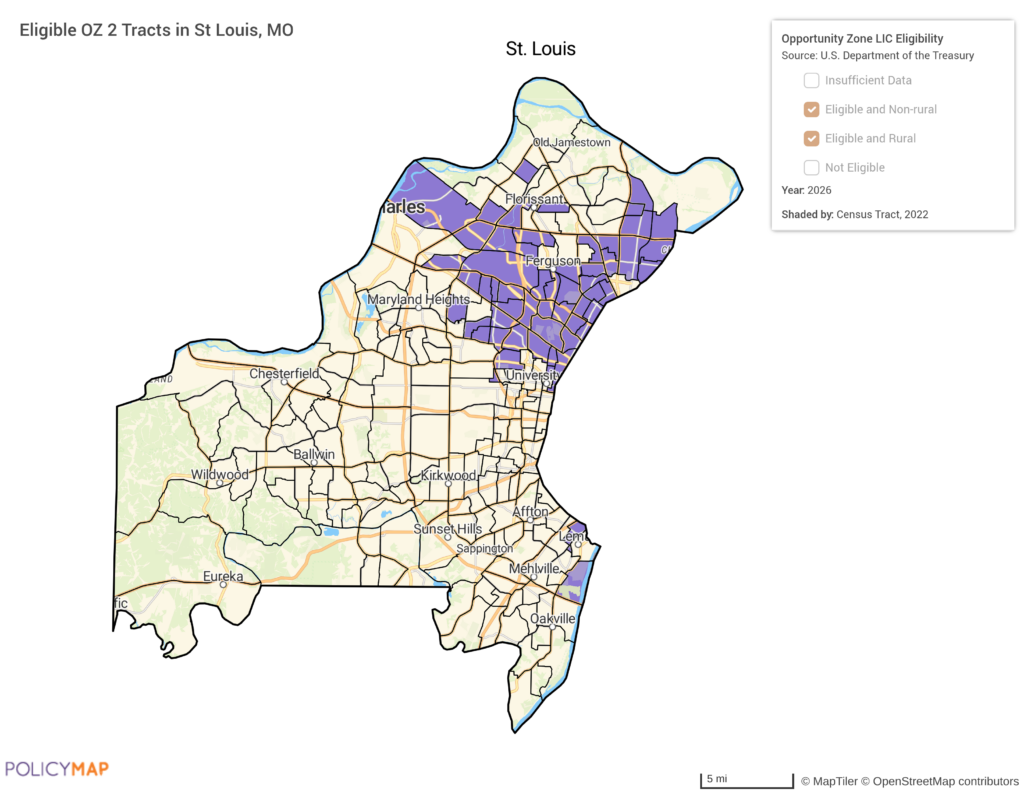
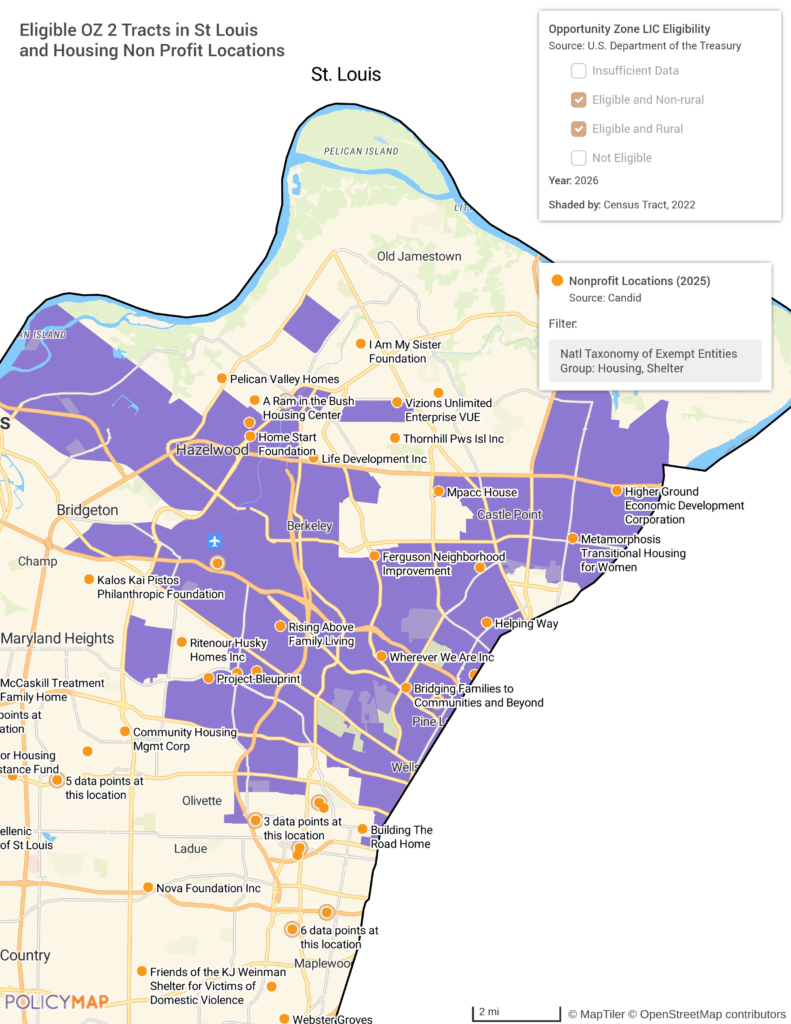
- Community Assets: Overlay nonprofit locations and anchor institutions like libraries and hospitals on top of eligible tracts to identify community stakeholders for strategic discussions. The first map shows eligible tracts in St. Louis; the second map shows the locations of housing focused nonprofits on top of eligible tracts.
- Once the final OZ 2.0 designations are approved by Treasury, we will add those to our platform as well, giving users the ability to determine which investment locations fall into designated zones.
With PolicyMap, stakeholders can see which eligible tracts have the highest need, the strongest community indicators, and the greatest potential for lasting impact. That intelligence matters whether you’re a state agency prioritizing nominations, a nonprofit advocating for underserved communities, or an investor looking to deploy capital with genuine community benefit in mind.
Request More Information
Opportunity Zone 2.0 designations will shape where private capital flows for the next decade — and the window to influence those decisions is open right now. Ready to see which eligible tracts in your region have the greatest need? Contact PolicyMap to request a demo and data walk-through by completing the form below.